You want nothing more than plan that beautiful trip to Africa. We understand you like no other, because there is nothing more beautiful than that! As a conscious traveler, do you want to do this as sustainably as possible? You can!
In this blog we take you on a journey through Africa, focusing on sustainable tourism. Together we’ll discover how to leave as small a footprint as possible, so the beautiful destinations you visit are preserved for future generations. We share valuable measures you can take as a tourist and give concrete tips to embrace sustainability, without having to compromise on the pleasure and impressions of your travel experience.
1. Choose eco-friendly accommodations
One of the most important aspects of sustainable travel is choosing eco-friendly accommodations. Accommodations that use renewable energy sources, apply water-saving measures and support waste recycling contribute to reducing your ecological footprint.
While some eco-friendly accommodations may have higher prices due to their commitment to sustainability, there are also options that are affordable for travelers on a budget. (Low-budget) hostels and guesthouses can also take eco-friendly measures, such as using reusable products and recycling materials. When you book an accommodation, you can inquire about sustainability efforts and any certifications, such as an eco-label or an environmental program recognition. Of course you can also make your stay as eco-friendly as possible by taking certain measures, read more about this in this blog!

One of our favorite places to stay in Botswana: Wildtrack Safaris Eco Lodge is an ecological and sustainable property offering ethical and eco-friendly safaris and tours, focusing on observing animals in their natural habitat without disturbing them. Click here for more information.

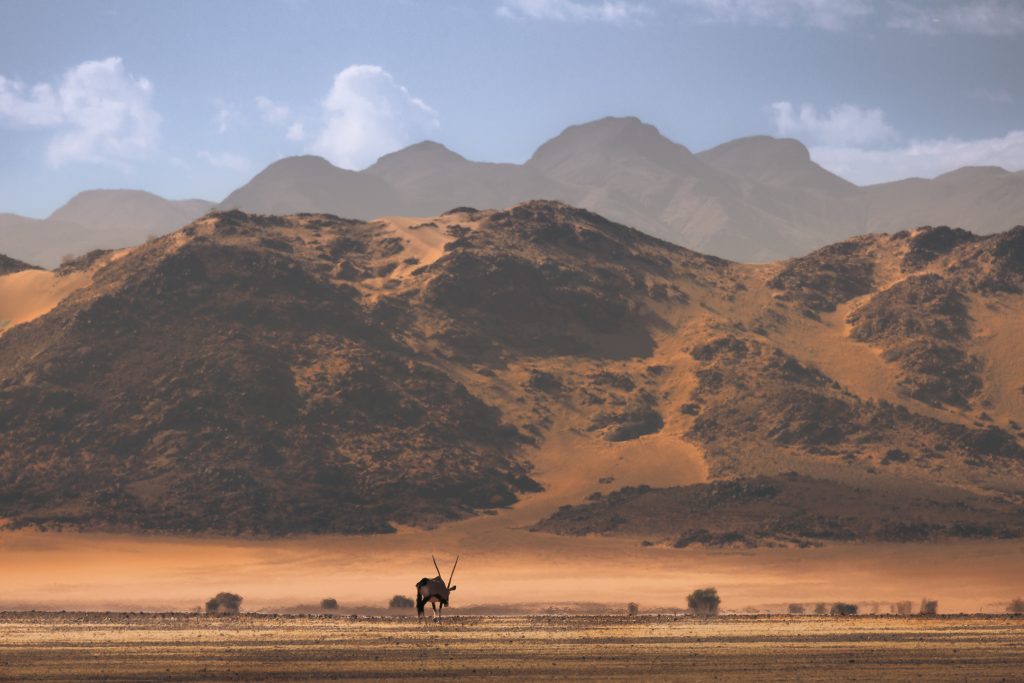
One of our favorite places to stay in Namibia: Barkhan Dune Retreat is an ecologically sustainable property dedicated to preserving the delicate desert ecosystem. They use solar energy and efficient water management to minimize their impact on the environment. Click here for more information.
2. Energy and water savings
A very simple but effective measure that you can take into account during your Africa trip: limit energy and water consumption, wherever you are! Turn off unnecessary electronic devices and avoid prolonged showering. Turn off the tap while brushing your teeth. You can also easily reuse towels and bed linen to save energy and water in your accommodation.
These measures allow you as a tourist to leave a smaller ecological footprint during your trip through Africa. That feels good, right?!
A journey only becomes truly meaningful when it benefits both the traveler and the destination.
Unknown
3. Respect the culture and traditions
In addition to all kinds of ecological aspects, sustainable travel also includes respecting culture and traditions. How about that? Respecting sacred sites, local customs, dress codes and social norms helps ensure that travelers do not inadvertently conflict with the culture of the host community. Familiarize yourself beforehand with the customs and standards of the places you are going to visit. Show respect for religious sites, use local language greetings, and ask permission before taking photos of people. Not only will the locals greatly appreciate this, it also ensures the preservation and appreciation of the unique cultural identity of the destination you are visiting!
We were once approached in a small internet cafe in Botswana by a lady who was disappointed that we could not greet her in the local language. She said that she herself had once traveled to Paris and learned to greet in French beforehand and how valuable that turned out to be afterwards. She then sat down at a PC to surf the internet. With some well deserved embarresment, we quickly looked up ‘how to say hello’ in Setswana -local language Botswana- and when she left a bit later we said hello to her ‘local’. She showed a big smile and really appreciated this. We had a nice conversation and we thanked her for the inspiring lesson.

Immerse yourself in the culture and show interest in what the locals are proud of!
4. Limit the use of plastic waste
Plastic pollution is a global problem and Africa, unfortunately, is no exception. Plastic waste is a huge threat to Africa’s ecosystems. Bring your own reusable water bottle and coffee cup to avoid using plastic bottles and cups. Don’t forget to bring a reusable bag when shopping so you don’t have to use plastic bags. If you produce waste, make sure you recycle it properly or dispose of it in special bins if available. Every bit helps!
Several countries in Africa have now introduced laws to ban or strongly reduce the use of plastic bags. (including: Rwanda, Kenya, Tanzania, Morocco, South Africa and Namibia)
5. Buy local: Support the community
Buy souvenirs and products directly from local artisans and farmers whenever possible. Buying local in Africa is sustainable because it reduces carbon emissions, supports local economies, preserves traditional crafts, reduces packaging waste and provides authentic travel experiences. Also support local initiatives, such as visiting community-based tourism projects. The proceeds are often invested in the local population/communities.
For example, choose local guides and tour operators. That will have a positive impact on the local economy. By using their services, you stimulate employment and encourage sustainable development. Not only do you support local developments; it is also just great fun and educational to go out with local guides, they can often tell you so much more about their culture, traditions and country. It will enrich your Africa trip even more, trust me!

Beautiful handmade souvenirs in Botswana.
6. Respect for nature and wildlife
Africa is home to some of the world’s most impressive wildlife. When observing animals in their natural environment, always keep a safe distance and do not disturb their behavior. Choose eco-friendly safaris and tours that adhere to strict ethical guidelines and are committed to wildlife conservation. Also remember to respect nature and landscapes, do not leave any waste and do not pick any plants or flowers.

On a long road trip, you might have to pee on the way; No worries, we’ve all been there! Tip? Do not leave toilet paper in nature, did you know that it can take months or even years for the toilet paper to decompose?! Keep a waste bag in your car and throw it away at a later time.
Avoid at all times attractions where wild animals are used for entertainment, such as elephant rides or stuffed animal farms. The lion cubs that you can take a picture with while cuddling, are later – when they become too big and too unmanageable – sold to so-called ‘hunting farms’, where wealthy tourists are allowed to shoot the animals for a lot of money, so they can ‘proudly’ take a picture with a lion. Only now he’s been shot. (trophy hunting). Be aware that many interactive activities involving wildlife involve animal suffering.
Unfortunately, we increasingly see guides AND tourists disturbing wildlife. During our game drive, for example, we encountered a few sleeping lions and stayed at a distance with our car. Soon a guide – who saw us standing still – came to take a closer look. He also discovered the lions and parked his 4×4 right in front of us so that we couldn’t see the lions anymore (annoying!). The tourists found it visibly but boring that the lions were deep asleep, so they started to get the animals’ attention by making noise. The guide took it a step further and drove to within a few centimeters of the lions, causing them to lie upright. Tourists now were happy: because they could take better photos. We were VERY disturbed by this and eventually drove away.
Tip: If you witness such behavior (by guides or tourists), take a photo or film it, register the license plate number and report this at, for example, the entrance of the park or the concerning lodge! Often to be read on the side of the safari vehicles. In this way, this kind of behavior can be addressed. More and more local authorities are also calling for this to be reported. They fine guides or denying tourists who show unacceptable behavior, access to the parks.

Cubs are taken away from their mother (much too early) so that they can generate money as long as possible for tourists who want to take a picture with them while cuddling. Read more about cuddly farms here! (photo © Four Paws)

The space of the lions is not respected here at all. Think carefully about where you want to travel and also read the experiences of others. This is probably not what you want to see on safari! (photo © Southern destinations)
Conclusion
How great that you went on this sustainable journey through Africa with us! Together we discovered how you, as a conscious traveler, can leave as small a footprint as possible while enjoying all the beauty that this beautiful continent has to offer.
Let it be the mission of all of us to preserve Africa’s stunning landscapes, diverse cultures and wildlife for future generations. Choose eco-friendly accommodations, limit the use of plastic waste, support local communities by buying locally and show respect for nature and wildlife.
Do you have any additional sustainable tips? Let us know in the comments!
"Small actions by many can lead to a lasting revolution"