Explore 11 irresistible reasons to visit Botswana; where stunning nature, welcoming locals, and abundant wildlife encounters come together for an unforgettable adventure. Welcome to enchanting Botswana, an African treasure trove of unparalleled beauty and diversity. In this blog, you’ll discover why you absolutely must visit this breathtaking land. Let yourself be enchanted by Botswana, where adventure and nature intertwine in a way you’ll never forget.
1. The Batswana
When you think of Botswana, you often immediately think of wildlife and safari, and rightly so!
Still, I’m going to start this list with the Batswana: the people of Botswana. We have had such great experiences with the locals in this beautiful country. The Batswana are incredibly hospitable, helpful and very interested.
For example, we were helped while we were stuck with our jeep, very deep in the sand. Coincidentally, an anti-poaching unit passed by at that moment and the whole group jumped out of their truck to help us, we spent almost an hour getting out and they thought it was a great challenge. Somewhat embarrassed, we apologized for the inconvenience, but they didn’t want to hear about it. They were happy to help us: “A good workout!” they indicated! Even afterwards they did not want to take anything from us and wished us a nice trip. They continued their way, smiling broadly and waving, and luckily so did we!
The Batswana are incredibly proud of their heritage and love to share their stories about the country. In addition, they are very interested in the other.
You will also find the San/Bushmen people in Botswana. They have been living in the Kalahari for over 20,000 years. They manage to survive in the most brutal living conditions in this semi-desert. They pass on their survival techniques from generation to generation.
There are San/Bushmen communities where you can visit or stay overnight and where they proudly let you take a look at their daily life.


2. The Okavango Delta
When you say Botswana, you say ‘Okavango Delta’: the beating heart of Botswana. In addition to the great wildlife that can be found there, it is also a very special natural phenomenon that ecologists and biologists cannot stop talking about. It’s the largest inland delta in the world. And how special: a desert area that is largely flooded by water?!
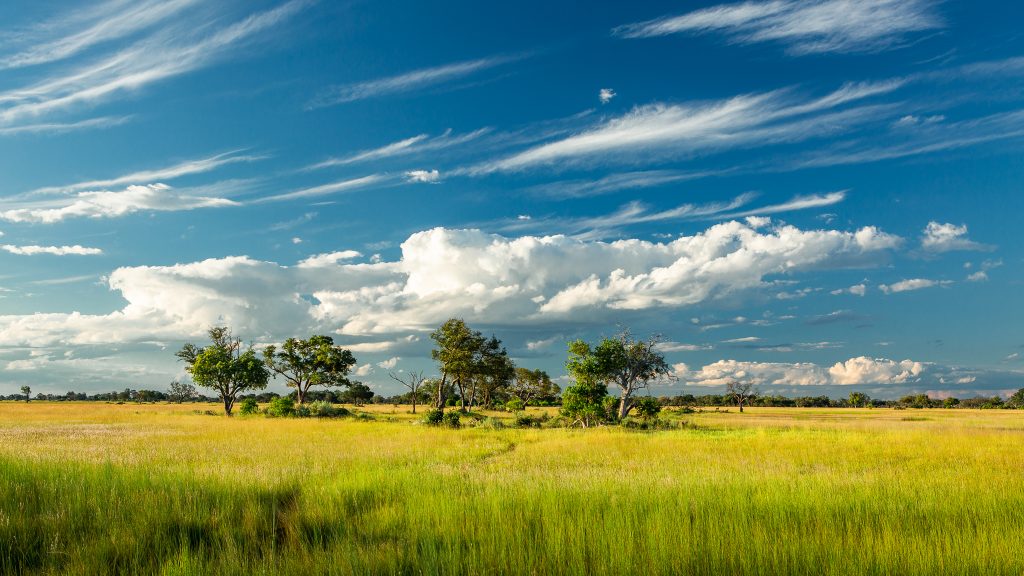
The area extends over more than 15,000 square km and is constantly changing. The Okavango Delta is made up of many swamps, islands, and seasonally flooded grasslands that are a haven for countless wildlife.
It’s a natural oasis in which the eternal cycle of flooding continuously maintains and shapes the ecosystem. Since 2010, the Okavango Delta has been a UNESCO World Heritage Site.
The national park ‘Moremi Game Reserve’ is located in and around the Delta, where you can camp or stay in super-luxurious lodges. You can also visit some very exclusive remote places in the Delta that you can only be flown to. It costs a fortune, but you’ll undoubtedly get a very special experience in return. I can’t tell you much about that myself, I’m still waiting for the jackpot to fall on my lottery ticket. 😉
3. Wildlife paradise
I mentioned it a few times already; wildlife! Well, no one can deny that Botswana is known as an absolute wildlife paradise! Of course, the water-rich Okavango Delta provides an enormous diversity of animals, but the Kalahari (semi) desert also has a lot to offer when it comes to wildlife. In Botswana you actually have a 100% guarantee all year round that you will be overrun by many encounters with wild animals. Both inside and outside the parks!
In Botswana you’ll find Africa’s largest elephant population. Even when you drive outside the parks you can just encounter many (crossing) elephants, so always pay attention!
In addition, many people do not know that you can find one of the largest animal migrations in the world in Botswana: the zebra migration. This migration of more than 30,000 zebras takes place twice a year. The herds first move from north to south and later back from south to north. They move with the seasons and rainfall, always looking for fresh grassland.
Botswana never disappoints when you’re looking for wildlife! It is par excellence the country to spot predators, desert animals, birds, etc.!
4. Chobe national park
One of Botswana’s real gems is Chobe National Park. The park is known for its high concentration of wildlife and for the courageous lions that regularly hunt young and sub adult elephants. So, Chobe NP is not for the faint-hearted!
The north side of the park is bordered by the Chobe River, which allows the animals to find sufficient water all year round. The park is about 11,000 square km in size and consists largely of grassland and mopane trees. In the southern part you will find more savanna.
You can stay overnight in different places and opt for ‘unfenced camping’ at, for example, Ihaha (with a view over the floodplains), but the beautiful and wild camps Linyanti and Savuti are also located within the park. For these 2 above camps you have to drive a lot further south. You pay an average of about 50 dollar per person per night for these camping spots. They have ablutions and at your camping spot you can braai (bbq) and there is a place to light your campfire so you can sit around the fire in the evening and enjoy the nighttime bush sounds! It’s not cheap, but the experience makes it worth every penny.
A 4×4 car is mandatory to enter the park. A large part of the park consists of tough deep sand roads, especially the area around Savuti and Linyanti. It will take you at least half a day to descend to this area from Kasane, as the pace is very slow and you’ll probably will stop many time because of animal sightings along the way. Some 4×4 experience can certainly help you get through the tough sand roads.
In addition to camping, there are several luxury lodges in the park, such as Chobe game lodge, Camp Savuti and Ghoha hills eco lodge. Don’t forget to fill your wallet in advance, because you pay an average of about 500 dollars per person per night when you stay in these lodges. Don’t you like driving a 4×4 in the soft sand between the elephants? No worries, you can also stay in and around Kasane and book tours from there so you can visit the park with a guide.
And finally: your visit to Chobe N.P. is only truly complete after a (sunset) boat trip on the Chobe River. Elephants swimming across the river, many hippos, gigantic crocodiles along the riverbanks and the calling of African fish eagles that regularly fly by, magical!! Do it!!

5. Kalahari Desert
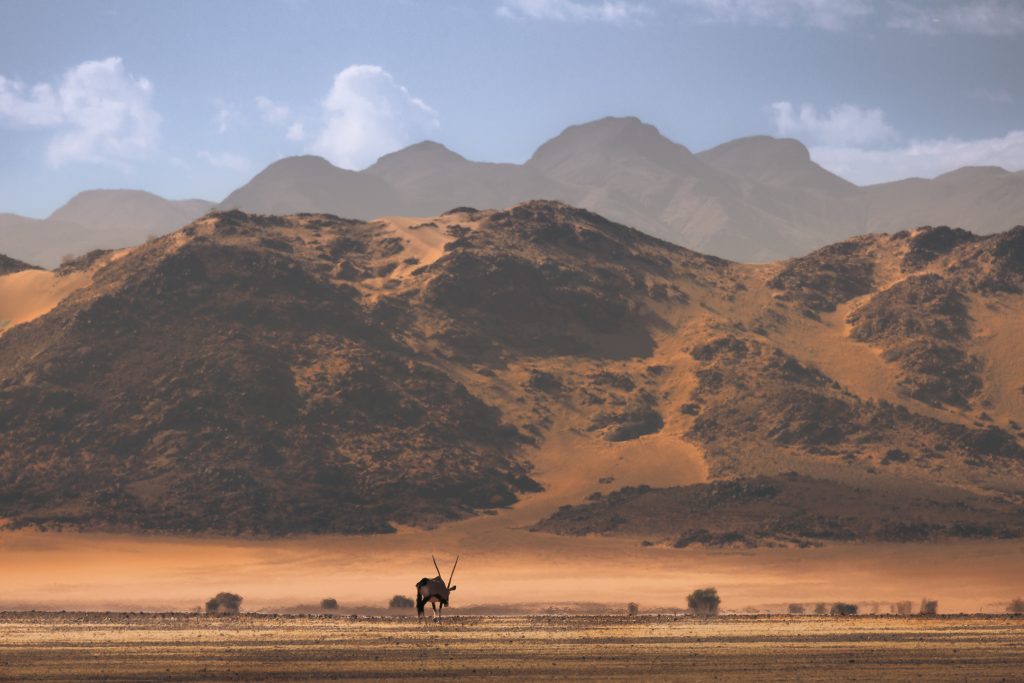
Botswana largely consists of the Kalahari Desert, in fact it is a semi-desert. The name Kalahari is derived from the word kgalagadi: Great thirst. I can only imagine, because it’s one of the largest sand plains in the worl! The Kalahari includes three of Africa’s most remote game reserves: the Central Kalahari Game Reserve (CKGR), Khutse Game Reserve and Gemsbok National Park. Kgalagadi Transfrontier National Park is also located in the Kalahari Desert.
Many of the nomadic San (bushmen) originated here. They have adapted to the unforgiving living conditions of the Kalahari. What makes this desert special is that it does rain there. Not often, but enough to find vegetation, which is vital for the San. They can extract moisture from the roots of the plants, in addition to the food they gather from hunting.
The relationship between the San and the government is very sensitive. Between 1997 and 2005, many San had to leave the desert “for conservation purposes.” In 2006, the San won a lawsuit against the government. The judge ruled that the San’s removal was illegal and allowed the San to return to live in the area. Today, most San live outside the reserve and lead a marginal existence, often dependent on government aid. They often work for wealthy ranchers or, for example, sell traditional handicraft items to tourists.
Furthermore, you will find a remarkably large amount of wildlife in the Kalahari, despite the dry and rough conditions. The desert provides plenty of food in the form of tough grasses and – believe it or not – watermelons. The animals have managed to adapt to the environment. You will find the oryx, blue wildebeest, red hartebeest, zebra, kudu, elephant, giraffe, lion, leopard and cheetah. This is just a small list, so you definitely don’t have to ignore the desert if you’re looking for wildlife!
6. Makgadikgadi pans
The Makgadikgadi Pans are among the largest salt pans in the world, located in northeast Botswana. The salt pan is all that remains of the formerly huge Lake Makgadikgadi, which once covered an area larger than Switzerland but dried up tens of thousands of years ago. The area is surrounded by the Kalahari Desert.
Only a small part of the salt pans are located within the boundaries of the Makgadikgadi National Park. Ntwetwe Pan and Sowa Pan – known for the huge colony of flamingos – are the largest and are located outside Makgadikgadi N.P.
Torrential rains turn the dry salt pans into a paradise for birds and land animals. The rainy season is heaven for waterfowl. During this period, you can see animals feeding on the mineral-rich mud. Sometimes they are up to their knees in the water. The rains usually start around November and end around March. The pans retain water until April/May.
Kubu Island is an iconic place in Botswana and if the weather conditions are good and it is not too wet, you can reach this ‘island’ by 4×4 and spend the night there. The island consists of huge rock formations and giant baobab trees and is completely surrounded by the salt pan. You can enjoy the endless view and the magical starry sky. A true photographer’s dream!

7. A birdlover's heaven
Do you like birds – just like we do? Then Botswana is really the absolute ‘place to be’! The water-rich Okavango Delta is a refuge for hundreds of bird species, but you will also find a great diversity of birds in the desert. There are over 600 bird species in Botswana. So don’t forget to bring your binoculars!
The best time to watch birds in Botswana is during the rainy season, when you will find many migrations. The Okavango Delta always offers an ‘all you can eat’ buffet for birds. In times when there’s a lot of water, it is swarming with insects and crustaceans. When the water pools slowly dry up again, the fish are floundering in the last drops of water so that birds can find enough fish!
There has been discussion for some time about which is the national bird of Botswana. Many say the beautiful pink/blue colored lilac breasted roller is the national bird, but the Ministry of Environment calls the kori bustard the national bird. It’s not official at all, so choose your own favorite! As such, we choose the African fish eagle, which you often see and hear in Botswana. The call of this bird gives us the absolute Africa feeling! The call of Africa..


8. Adventure
While many of Botswana’s national parks are very remote and wild, you can still enjoy many activities. Of course, you can go on an adventure yourself – or with a guide – driving a 4×4 car through the parks in search of wildlife. Another option is to do it by boat. You can go on various trips on the Chobe River or in the Okavango Delta by motorboat. Together with a guide you’ll look for animals and birds while you enjoy the spectacular views and the wonderful nature of Botswana.
In the Okavango Delta you can also enjoy a boat trip in a mokoro. These are wooden hollowed out canoes, originally made from Kigelia and/or ebony. A poler – the boatswain or woman – pushes the boat further, by standing on the tip of the mokoro, pushing it off with a long stick against the shallow bottom of the delta. You can sail in peace and quiet through the shallow waters of the Delta. And it is certainly adventurous when you are occasionally stared at by a large crocodile or hippo. Then let’s hope they didn’t get out of bed the wrong side! 😉
What about an adventure high in the sky?! You can book a plane or helicopter flight to admire the Okavango Delta from the air. Only then can you really see and admire the beautiful waterways. You will also see many animals from above!
Another option is to explore various places by foot, in most cases it’s advisable to do this with a guide to ensure safety. In addition, it is just great fun to learn more about the country coming from the local guide and to have a conversation about it. Together with the San you can go on a walking tour through the Kalahari where they will guide you in all the wonders that nature has to offer. Or you go with a San guide to the Tsodilo Hills in search of the bushmen paintings.
In short, Botswana offers plenty of adventure for both young and old!


9. Unfenced camping
For us, definitely one of THE ultimate reasons why we love Botswana so much: unfenced camping! In other words, camping in the national parks without fences. So you are completely in the habitat of all wild animals.
That means that elephants, lions, hyenas etc can come to visit at any moment while you’re sitting on your camping chair enjoying a cold drink, how cool is that?!
You might need some nerves of steel, because it doesn’t get much wilder! In the parks there are several places where you can camp. In Central Kalahari Game Reserve there are even places where you camp all alone. The neighboring campsites are sometimes miles away!
Nothing is as exciting and adventurous as camping in the wild. When night falls you can really hear the bush come to life. Roaring lions, calling hyenas, all night long. So cool!
There are several do’s and don’ts to keep in mind when camping unfenced in the parks. I will write more about this in another article.

10. Conservation and ‘low impact’ tourism
Botswana is known for a very strong conservation policy. About 45% of the country consists of protected areas. Botswana is committed to low impact tourism. That is to say: no mass tourism in order to limit the damage to the nature reserves and to provide all the space necessary for the flora and fauna of the country.
As a tourist you can really benefit by enjoying a great safari destination without hordes of tourists around you. Especially a little further in the parks. You can drive around for hours without encountering other people, that sounds fantastic, doesn’t it? We’ve had the most special sightings without anyone around. Those are such impressive moments, ‘National Geographic vibes’ guaranteed!
The prices are certainly a lot higher comparing to many other safari destinations, but the incomes are invested directly in all conservation programs. So, your money is well spent and that gives a nice feeling, right?!

11. Safe travel destination
Last but not least: Botswana is a safe country to travel. It is one of the most stable continents of the African continent. Sufficient natural sources of income, a stable government and a well-developed tourism policy ensure that crime targeting tourists is very limited. Botswana uses hefty penalties when it comes to crime, which can even include a death penalty. So, pretty intense I’d say…
Of course, there are sometimes robberies or thefts, but they are rather the exception and certainly not the norm! It is, of course, advisable to take safety measures into account in Botswana as you would in other countries.
Botswana also has a good road network, mostly asphalted, outside the nature reserves. Please note that there are many (large) potholes in certain parts, so you must always be alert and drive carefully. You will also encounter a lot of livestock (cows, horses, goats and donkeys) on the road, which you have to take into account. Furthermore, it is not unusual when a group of ostriches suddenly runs across the road – which looks hilarious by the way – or when a herd of elephants suddenly cross the highway.
Do not drive in the dark to avoid dangerous situations. You must adhere to the safety rules in the parks. Always keep enough distance from, for example, elephants, hippos and buffaloes to avoid being attacked. In the parks you have no telephone coverage, and you are really on your own. We always choose to take a satellite phone with us in case of emergency.
All in all, if you use common sense, Botswana is a pretty safe destination to travel!
Final conclusion: Botswana is a safe, adventurous and beautiful country with great people and an enormous diversity of wildlife and nature!
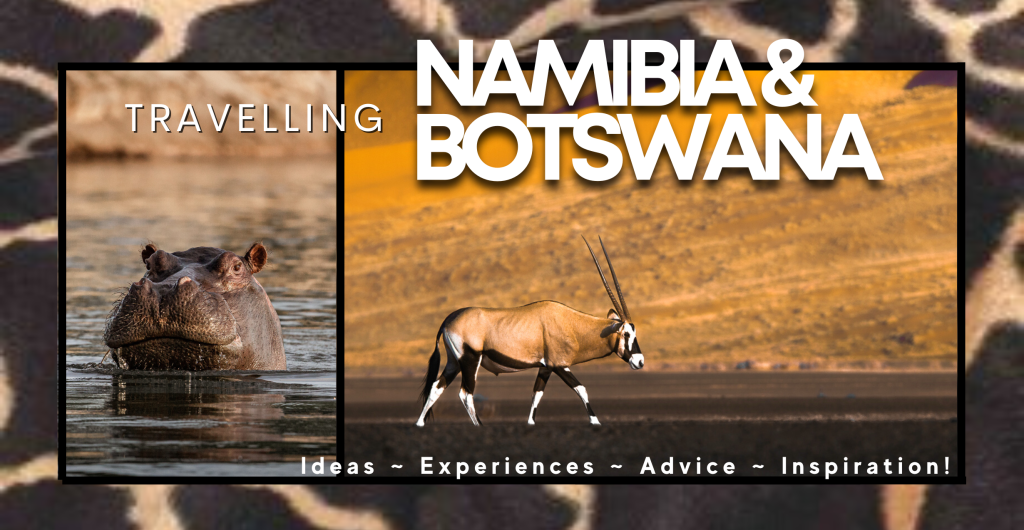
Are you considering traveling to Botswana? Join our facebook group ‘Travelling Namibia & Botswana’! You can ask for tips/advice or be inspired by other travellers, we already have more than 30,000 members, so it’s the ideal place to prepare your Botswana trip! Click down below!